ServicesRoof Inspections
Roof Inspections in Newark, OH
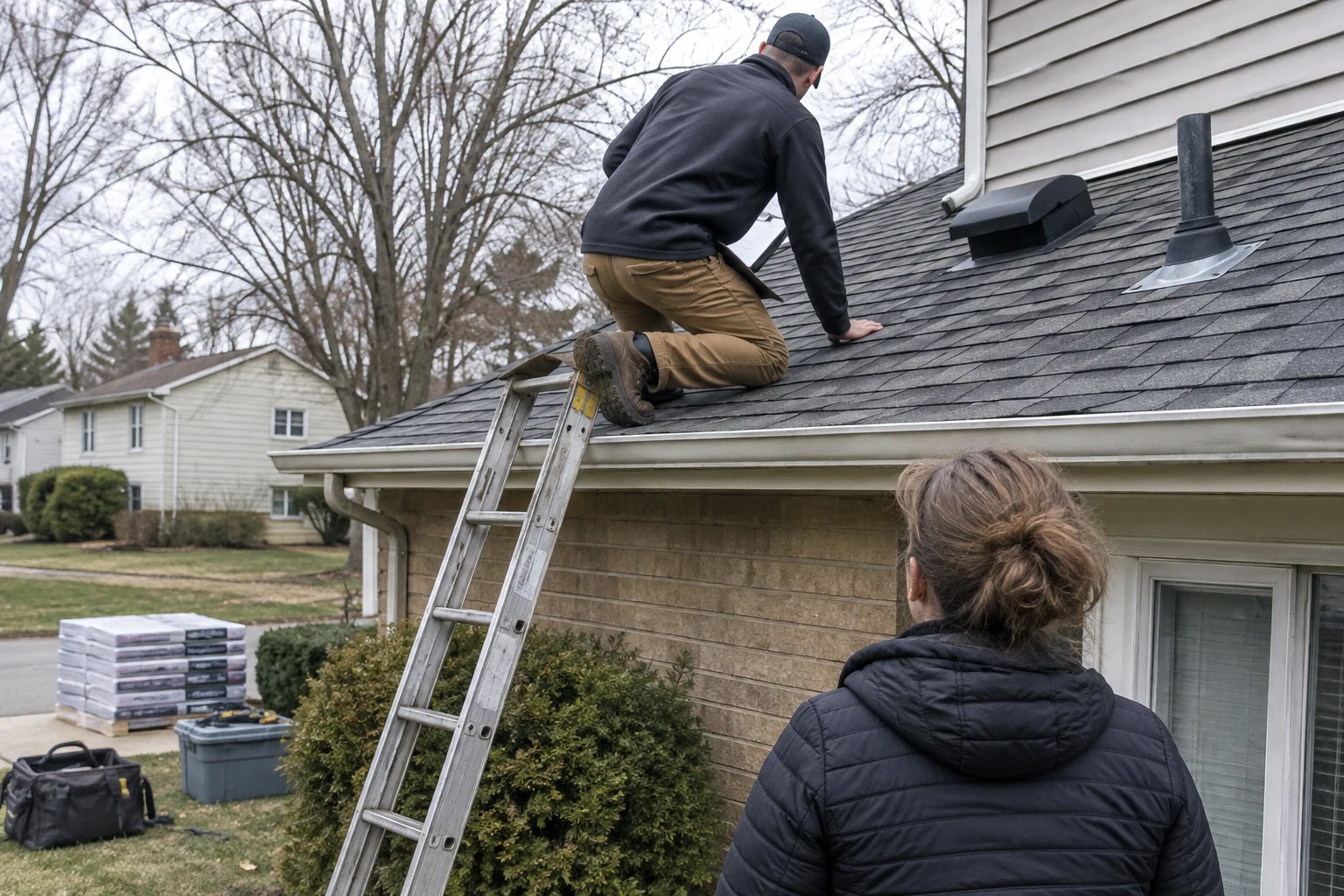
We walk the roof, climb into the attic and look closely at the spots where roofs usually give out. You see photos of everything we found and hear a plain answer: what needs work now, what can wait and what's fine. We also point out anything that wouldn't meet code on a future reroof.
What a roof inspection tells you
Most roof trouble starts out small. A tab lifts, a pipe boot splits, a nail backs out of the deck. You can't see any of it from the yard. By the time a brown ring shows up on a ceiling, the leak behind it has usually been there a while.
An inspection is a good call when a house is changing hands, when your roof has a lot of winters behind it, or when something up there just looks off. It's also smart before you sign for a big job. If someone has told you the whole roof needs to come off, a second roofer's opinion costs a lot less than a roof replacement you didn't need.
We look at your roof the same way a building inspector would. Ohio's residential code covers items like ice barrier along the eaves, drip edge, attic ventilation and the number of shingle layers allowed. We tell you how your roof measures up on each one, so a future repair or reroof doesn't turn up surprises.
What we check on every inspection
- Shingles on each slope
- We work across every slope for tabs that are cracked, curled or blistered, bare patches where shingles blew off and spots worn down to the mat. The amount of grit sitting in your gutters also tells us how much life the shingles have left.
- Flashing at chimneys, skylights and pipes
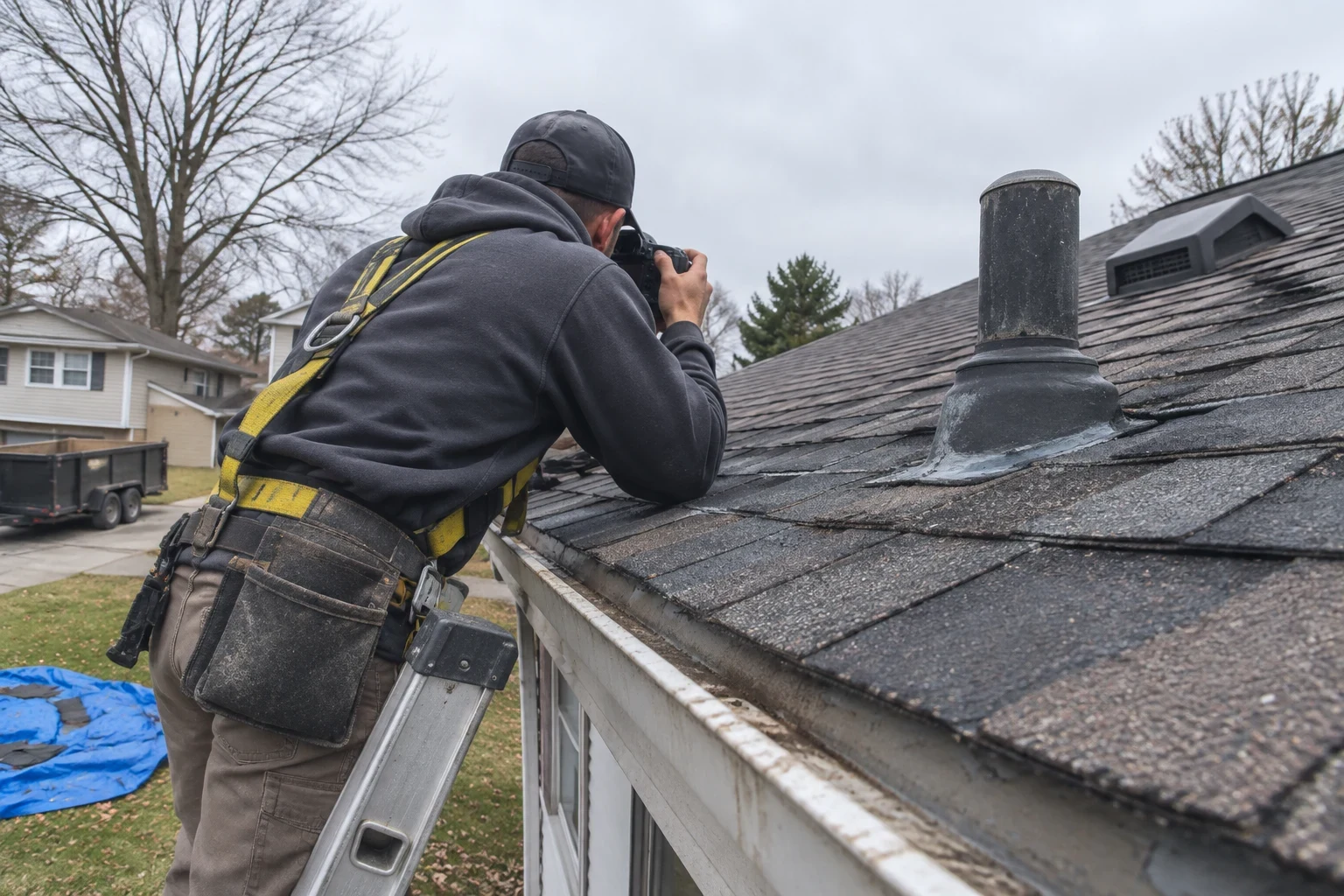
- Most leaks start where the roof meets a wall or where something pokes through, such as a chimney, skylight or vent pipe. We check the metal flashing, the sealant and the rubber pipe boots, which crack after years in the sun.
- Attic and underside of the deck
- From the attic we look at the bottom of the deck for daylight, water stains, damp insulation and wood that has gone soft or dark. We also confirm the intake and exhaust vents are open and moving air the way they should.
- Eaves, roof edge and gutters
- We look for drip edge, signs of past ice dams and gutters that sag, pull away or hold water. We also note rotted soffit and fascia, since rot at the edge often traces back to a gutter.
- Code items for a future reroof
- We record how many shingle layers are on the roof and where ice barrier or venting falls short. They may be fine today, but they come up the moment a permit is pulled.
Signs it's time to have your roof looked at
Stains on ceilings or in the attic
Brown rings or streaks mean water got in somewhere. The source is often a few feet uphill from the stain.
Icicles and ice ridges in winter
Heavy ice along the eaves points to heat loss and poor venting. Meltwater backs up under the shingles and can leak into walls.
Granules in the gutters
A handful is normal. Piles of sand-like grit mean the shingles are wearing out.
Curling or missing shingles
Edges that cup or lift catch wind and let water under. One missing shingle is a quick roof repair if it's caught early.
You're buying, selling or refinancing
Buyers, lenders and home inspectors all ask about the roof. A written report with photos gives everyone the same facts.
The roof is 15 years or older
Older asphalt roofs can look fine from the ground and still have worn flashing and tired seals. A check now helps you plan instead of react.
How the inspection goes
- 1
Phone call and scheduling
You tell us what's going on and what you've noticed. We set a time and let you know what the inspection costs before we come out.
- 2
On the roof
If the pitch and conditions are safe, we walk the roof and check it by hand. If it's too steep or wet, we use ladders at the edges and tell you what we could and couldn't see.
- 3
In the attic
We'll need access to your attic hatch for a few minutes. This is where we see leaks, venting problems and deck damage that the outside hides.
- 4
Photos and a plain answer
We walk you through the photos before we leave. You get a list sorted into fix now, watch, and fine, plus any code items that would come up during a permitted job.
What affects the cost of an inspection
We give you the price on the phone before we schedule, so there's no guessing. Most of what moves it is how long the roof takes to check safely. If we find work, any repair estimate is separate and written line by line.
- Roof size and shape
- A simple gable roof goes quickly. Lots of valleys, dormers and chimneys mean more flashing to check and more photos.
- Pitch and access
- Steep roofs need extra safety gear and setup time. Tight lots or a lack of ladder space can add time too.
- Attic access
- An open attic with a pull-down stair is quick. A small hatch in a closet or a finished attic with no access takes longer and limits what we can see.
- Written report needs
- A walk-through with photos is standard. A more detailed written report for a home sale takes extra time to put together.
What people ask about roof inspections
Something not covered here? (740) 759-2865
Does someone need to be home?
It helps, mostly so we can get into the attic. If you are away, we still check the outside and send you the photos afterward. If the attic still needs a look, we come back for a short second visit.
Is this just a pitch for a new roof?
No. Many roofs only need a new pipe boot, some fresh sealant or a few shingles. If yours has good years left, we say so. If it is worn out, the photos show you why, and the decision is yours.
Does an inspection require a permit?
No. Looking at a roof takes no permit. Permits come into play for a replacement or a major repair. If anything we find would need one, we tell you and explain what the city inspector looks at.
Can you inspect a roof in winter?
Yes, as long as the roof is not covered in snow or ice. Winter is actually a good time to spot ice dams and frost under the deck. If it is not safe to climb that day, we reschedule.
How long does it take?
About an hour for most homes. Larger or steeper roofs can take a little longer. Before we leave, we walk you through everything we found.
Will you inspect roofs in Granville, Heath and nearby towns?
Yes. We check roofs in Newark, Heath, Granville, Pataskala, Johnstown, Buckeye Lake and Beechwood Trails. Let us know your town when you call and we will find a time that suits you.
Learn how your roof is really holding up
A single visit, actual photos and an honest answer. Call us and we'll pick a time that suits you.