ServicesSoffit and Fascia
Soffit and Fascia Repair in Newark
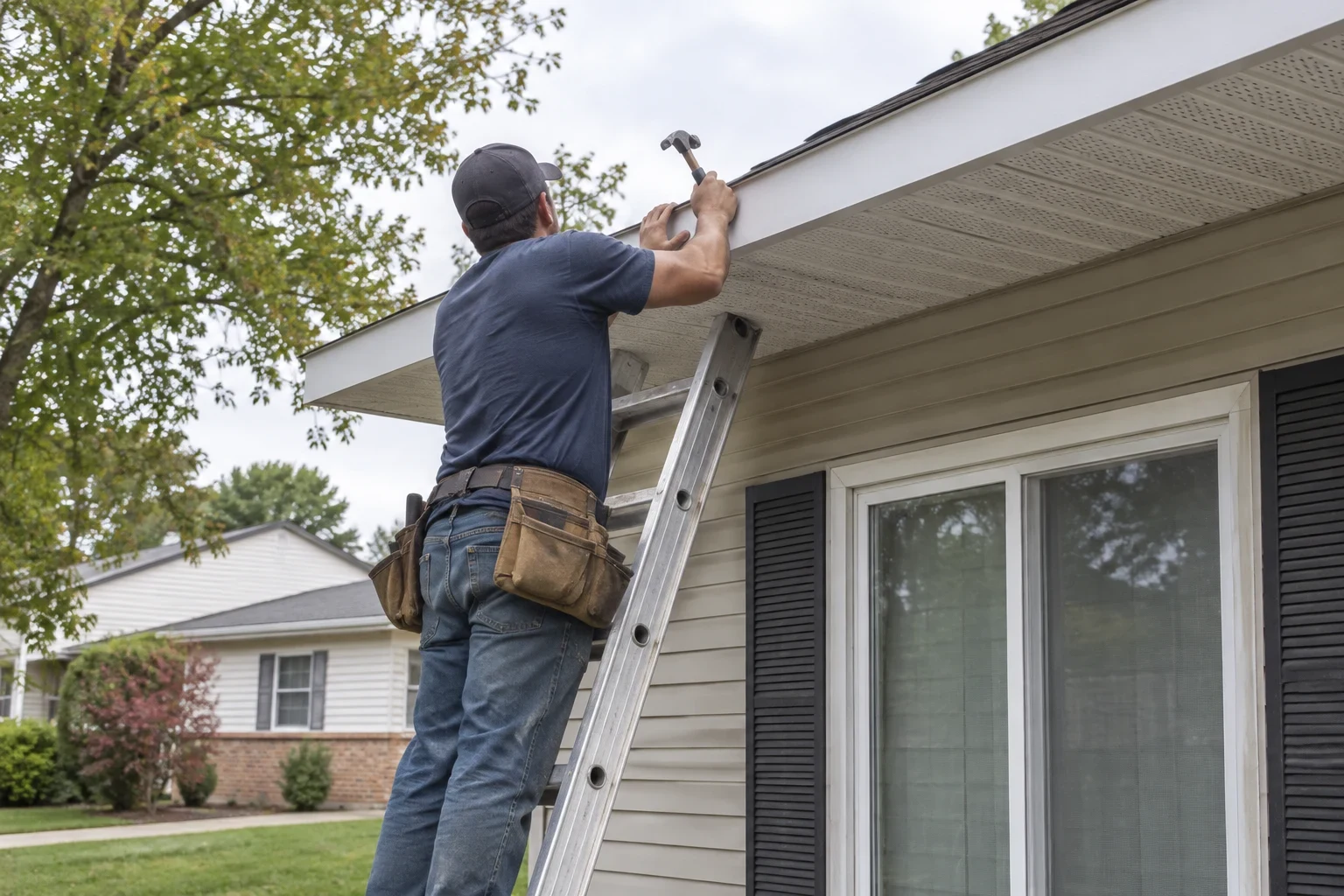
Soft fascia boards, sagging soffit panels and pests in the eaves all point to the same thing: the roof edge needs work. We cut out the bad wood, replace it with sound material, and set the soffit vents so your attic breathes the way the code expects.
What soffit and fascia do for your roof
The fascia is the board along the roof edge. Your gutters hang on it, and it closes off the ends of the rafters. The soffit is the underside of the overhang. On most homes it is also where fresh air enters the attic.
When fascia rots, gutters pull loose and water gets behind them. When soffit vents are blocked or missing, the attic runs hot in summer and damp in winter. That shortens the life of the shingles and the roof deck above.
This is the right call when the trouble is at the eaves and the rest of the roof is sound. If we find the problem runs into the roof deck, we will tell you, and roof repair may be the better fit.
What you get
- New fascia where the old rotted
- Soft or cracked boards get cut back until we reach sound wood, and new lumber goes in. We finish it with aluminum trim coil or primer and paint, whichever fits the look of your house.
- Soffit panels replaced
- Panels that are cracked, bent out of shape or gone are swapped for vented vinyl or aluminum. We use solid panels only in spots that need no airflow, like the ceiling over a porch.
- Attic intake air measured
- Under Ohio's residential code, attic venting is based on the attic floor area, with air coming in low and going out high. We size up your current intake against your ridge or roof vents and add more where it comes up short.
- Eave baffles
- Insulation tends to get stuffed into the eaves and block the soffit vents. Baffles keep a clear channel so air can travel from the soffit into the attic.
- Gutters put back up
- Fascia work means taking the gutters down. They go back on with new hangers fastened into sound wood, and we check that they slope toward the downspouts. New gutters are covered on our Gutters page.
- Cleanup
- We gather up old boards, nails and leftover panel pieces and haul them off before we leave that day.
Signs your soffit and fascia need attention
Paint peeling at the roof edge
Peeling paint on fascia usually means moisture is getting into the wood. Press it with a screwdriver. If it sinks in, the board is rotting.
Gutters pulling away
Hangers can only hold as well as the wood behind them. A gutter that sags or tips outward often sits on soft fascia.
Birds, bees or squirrels in the eaves
Gaps in soffit panels are an open door. Animals nest in the overhang and can move into the attic from there.
Icicles and ice along the edge
Heavy ice at the eaves in winter can point to a warm, poorly vented attic. Meltwater refreezes at the cold edge and works under shingles and into the fascia.
Stains or mildew on the soffit
Dark streaks under the overhang mean water is getting in from above, often from a gutter overflowing or a drip edge that is missing.
What moves the price
Soffit and fascia jobs are priced by how much roof edge is involved and what turns up behind the old boards. Fixing a few soft spots costs far less than redoing the trim around the whole house. Your written estimate breaks the work into separate parts, so you can see what each piece costs before you decide anything.
Linear feet of roof edge
More eaves and more gables mean more material and more hours.
Rot behind the fascia
If water has reached the rafter tails or roof sheathing, those need repair before new trim goes on. We show you photos before doing any of it.
Height and access
A one-story ranch is quicker than a two-story house with a steep yard or a deck under the eaves.
Material choice
Wrapped wood, painted wood, vinyl and aluminum soffit each carry different costs. We will tell you which ones make sense for your home.
Ventilation upgrades
Adding vented soffit and baffles where there were none adds labor but often helps the roof last longer.
How a soffit and fascia job runs
- 1
We look first
We walk the full roof line, probe the fascia, pull a soffit panel or two and check the attic side. We snap pictures as we go and hand them to you with a written estimate broken out part by part.
- 2
We sort out the paperwork
Trim work like this often does not need a permit. If your job touches the roof deck or framing, or your local building department asks for one, we pull it and handle the inspection.
- 3
We take down and replace
Gutters come off, bad wood comes out, and new fascia and soffit go up. Most homes take a day or two, depending on how much of the roof line is involved.
- 4
We check the airflow
Before we close up, we confirm the baffles are clear and the vents line up with open attic space. Then the gutters go back up and we clean the yard.
Common soffit and fascia questions
Is a permit needed for soffit and fascia work?
Usually not, because it tends to count as trim repair. Newark, Heath, Granville and Pataskala don't all follow the same rules, so we ask the building department first. When a permit is required, we get it.
Can the old fascia just be wrapped in aluminum?
Only when the wood under it is still sound. Wrapping over rot seals in the moisture and hides the damage until the gutters come loose. Bad sections get replaced first, and then we wrap.
What are soffit vents for?
An attic needs air to enter down low and exit up high, and soffit vents are where it enters. Without them, ridge or roof vents can't pull air through, so heat and moisture collect under the roof deck.
Do my gutters have to come down?
They do whenever fascia gets replaced. We put them back on the new boards with new hangers. If they are worn out, we can go over replacing them, but there is no pressure.
Can you do this along with a roof replacement?
That is a smart time for it, because the roof edge is already exposed. Every roof replacement estimate includes a look at the soffit and fascia, priced on a separate line.
Get your roof edge sorted out
Tell us what you are seeing at the eaves. We will set up a time to look, show you photos and give you a written estimate before any work starts.