ServicesRoof Replacement
Roof Replacement in Newark, OH
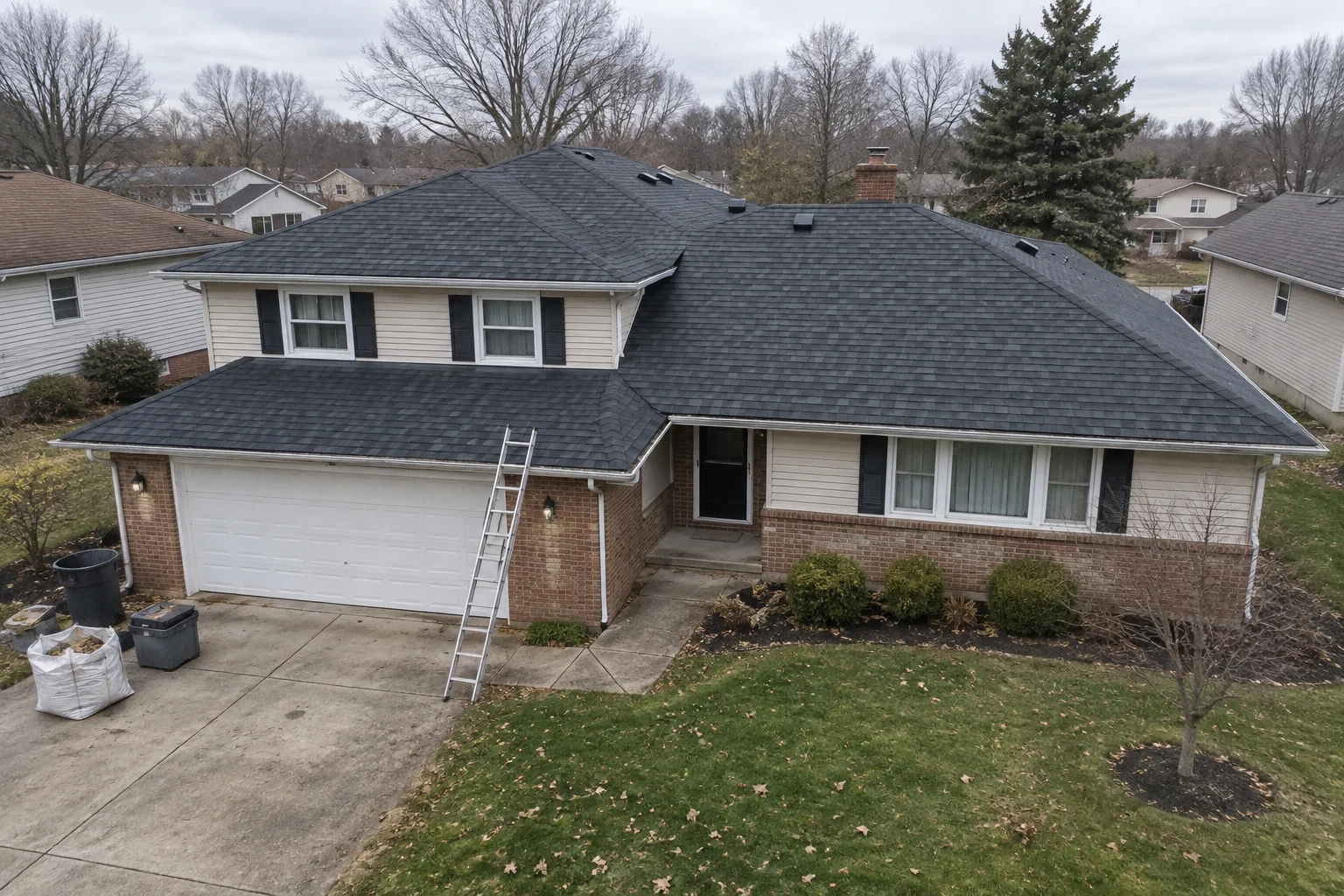
When a roof is worn out past fixing, we strip it to the deck, repair the wood underneath and install a new roof built to the residential code. We handle the permit and walk you through each step before anyone climbs a ladder.
When a new roof is the right call
Most roofs warn you before they quit. Shingles curl, granules wash into the gutters, and small leaks keep showing up in new places. Past a certain point, patching year after year costs more than starting fresh. We give you an honest read on whether your roof has reached that point. If roof repair still makes sense, we say so.
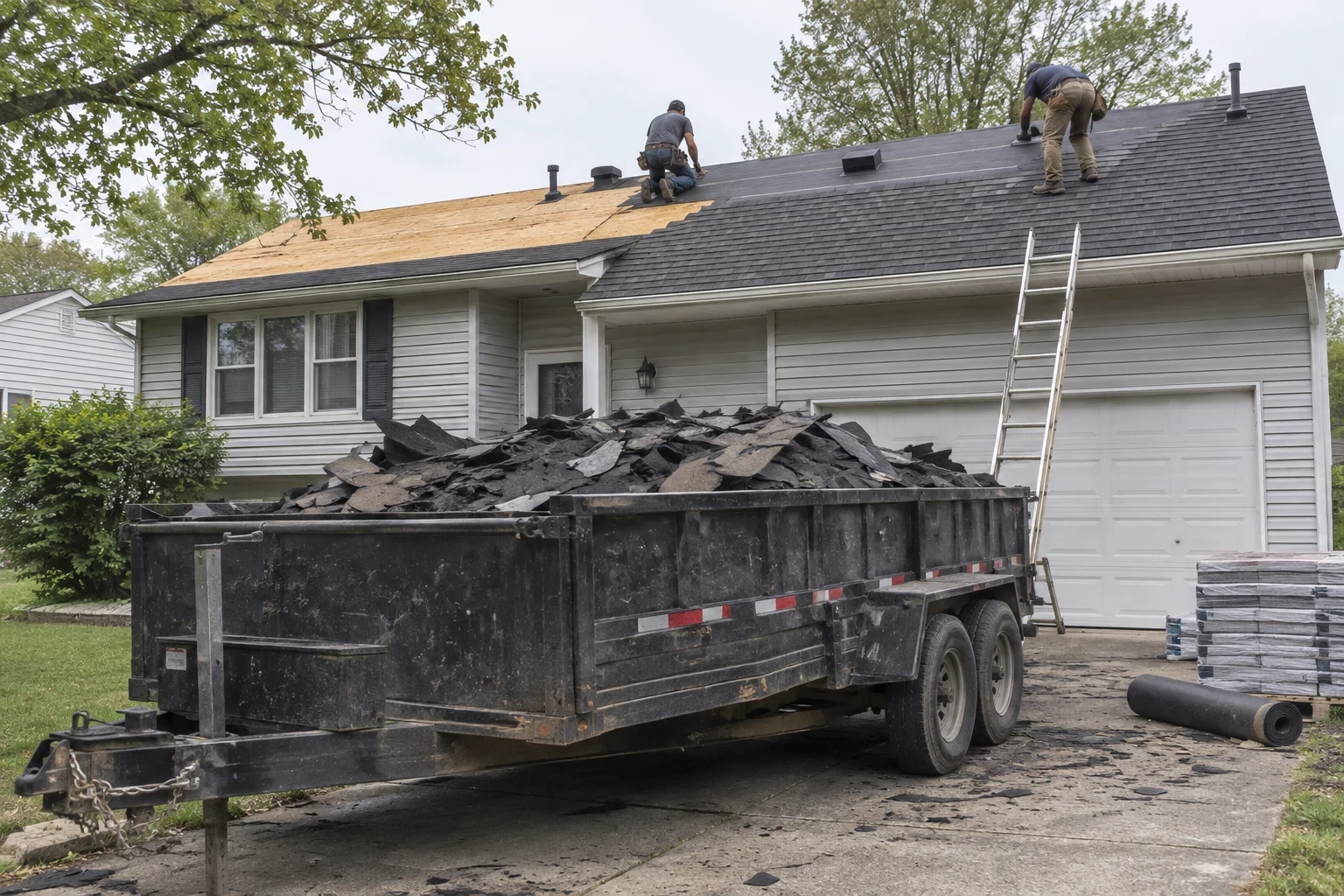
A replacement with us means a full tear-off. We do not lay new shingles over old ones. Stripping everything lets us see the decking, swap out soft boards and install the underlayment and flashing the code calls for. Your new roof also is not stuck carrying the weight and trapped heat of an old layer.
Freeze and thaw cycles are hard on roofs around Newark, Heath and Granville. That is why the ice barrier at the eaves gets close attention on every job.
What the job includes
- Permit filed for you
- We file with the local building department before the first shingle comes off. The paperwork is on us, not you. When an inspection is required, we book it and meet the inspector.
- Full tear-off to the deck
- Old shingles, underlayment and worn flashing all come off. We check every sheet of decking and replace boards that are rotted, soft or delaminated.
- Ice barrier and underlayment
- Code requires an ice barrier at the eaves, running from the edge to at least 24 inches inside the exterior wall. We install it there and in valleys, then cover the rest of the deck with underlayment.
- Drip edge and new flashing
- New drip edge goes on at the eaves and rakes. Chimneys, walls and pipe boots get new flashing instead of reused metal that already failed once.
- Ventilation that works
- We check that intake and exhaust vents are balanced for your attic. Poor airflow bakes shingles from below and feeds ice dams in winter.
- Cleanup
- Tarps go over plants and against the walls during tear-off. Every scrap goes in the dumpster, and we sweep your lawn and drive with a rolling magnet to catch stray nails.
Signs your roof needs replacing
Curling or cracked shingles
Shingles that cup at the edges or crack across have lost their oils. They will not lie flat and seal again.
Bald spots and granules in gutters
Granules shield the asphalt from sun. Once patches go bare, those spots wear through fast.
Leaks that keep turning up
A single drip can usually be fixed. When water shows up in a few rooms, or a new spot opens after each patch, the underlayment has likely given out across the whole roof.
A sagging or spongy deck
If the roofline dips or the deck gives underfoot, water has been soaking into the wood. That decking has to come off and be replaced.
Two layers already on
Code does not allow a third layer. If your home already has two, a tear-off is the only legal way forward.
What moves the cost
Every roof prices out differently. A ballpark that grows later helps nobody, so your estimate breaks out each line, including the permit fee. These are the things that swing the total most.
Roof size and pitch
More squares of shingles means more material and labor. Steep roofs need extra safety gear and go slower.
Decking condition
Rotten or soft boards stay hidden under the old shingles until tear-off is done. That is why your estimate sets a fixed price per sheet for any replacement decking, so you know the math ahead of time.
Layers to remove
Two layers take longer to tear off and add disposal weight.
Shingle choice
Architectural shingles cost more than basic three-tab but hold up better in wind.
Chimneys, skylights and valleys
Each one adds flashing work. A simple gable roof costs less to do right than one with lots of angles.
How a new roof goes on
- 1
Inspect and measure
We climb the roof and check the attic when we can get to it. We photograph what we see and review the pictures with you.
- 2
Estimate in writing
Your estimate lists materials, a decking allowance and fees on separate lines. None of it is hidden in a single total.
- 3
Permit and start date
After you say go, we file the permit application and agree on a start day that fits your schedule. We also tell you what to move off the driveway and away from the walls.
- 4
Tear-off and new roof
Most houses take one to three days if the weather cooperates. Larger or steeper roofs take longer. Open deck is never left uncovered overnight.
- 5
Inspection and final walk
If a final inspection is required, we take care of it. Then we walk the finished roof with you and answer any questions.
Roof replacement questions
Do I need a permit to replace my roof?
Around Newark, a full replacement generally needs one. We file it and list the fee on your estimate. Skipping that step can cause headaches when you sell your home or file an insurance claim later.
Can you just go over my old shingles?
We do not do overlays. A tear-off lets us fix the deck and install the ice barrier and drip edge the code requires. Covering old shingles hides problems you end up paying for later.
How long will I be without a roof?
You are not. We tear off and dry-in one section at a time, and anything open at the end of the day gets covered. Most jobs wrap up in one to three days.
Do I need to be home during the work?
No, but we like to talk with you at the start and at the walkthrough. It gets loud inside, so plan around naps and pets.
Can you do my gutters while you are up there?
If they are in good shape, we leave them alone. Drip edge tucks behind the gutter at the eave, so if yours are sagging or rusted through, doing both together saves a second round of work. We can go over gutter options on the same visit.
Find out where your roof stands
Give us a call, describe the leaks or wear you have noticed, and we will pick a day to come out and look. You will hear straight whether a repair will do, and you get an itemized estimate in writing.